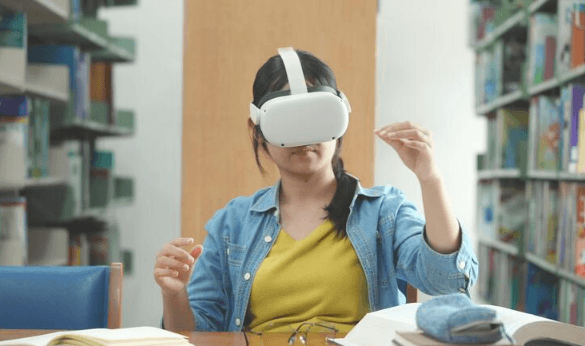

AR and VR in education and training offer immersive, interactive environments that complement traditional instruction. They support experiential learning, cognitive transfer, and high-fidelity assessment, with immersion design shaping engagement and efficacy. Headset ergonomics influence sustained attention and comfort, affecting access and equity. A systematic approach links outcomes to modality features, hardware, and classroom constraints, prioritizing evidence over preference. When thoughtfully designed and evaluated, immersive tools contribute to measurable gains and iterative refinement—yet questions remain about scalable implementation and long-term impact.
What AR and VR Bring to Education and Training
Augmented reality (AR) and virtual reality (VR) technologies reshape education and training by introducing immersive, interactive environments that complement traditional instruction.
This examination assesses how these tools support experiential learning, cognitive transfer, and assessment fidelity.
The analysis highlights immersion design as a central factor for learner engagement and efficacy, while headset ergonomics influence sustained attention, comfort, and equitable access for diverse populations.
Choosing the Right AR/VR Tools for Your Goals
Selecting AR/VR tools aligned with instructional objectives requires a systematic approach that links learning outcomes to modality features, hardware capabilities, and classroom constraints. This evaluation favors evidence over preference, emphasizing reproducibility and scalability. Tool evaluation and platform comparison emerge as two word discussion ideas guiding decision making, highlighting alignment with goals, cost, interoperability, and user expertise while supporting rigorous, reflective implementation and freedom to adapt.
Designing Immersive, Accessible Learning Experiences
Designing immersive, accessible learning experiences builds on the prior emphasis on evidence-based tool selection by grounding classroom implementation in principled design. This approach analyzes how immersive accessibility shapes pedagogical affordances, balancing immersion with clarity and inclusion. It examines how meaningful learner engagement emerges from well-structured interactions, accessible interfaces, and explicit guidance, ensuring rigorous evaluation and iterative refinement within diverse educational contexts.
Measuring Impact: Outcomes, Evidence, and ROI
Measuring impact in AR and VR education and training requires a disciplined assessment of outcomes, evidence, and return on investment.
The evaluation framework emphasizes outcome measurement, aligning learning objectives with observable performance gains and transfer to real tasks.
Cost analysis clarifies resource requirements, while ROI reflects long-term value, scalability, and sustainability, ensuring rigorous, evidence-based conclusions within freedom-friendly educational contexts.
Frequently Asked Questions
How Can Ar/Vr Support Learners With Disabilities Effectively?
Accessible design and inclusive assessment principles enable AR/VR to support learners with disabilities by offering customizable affordances, multimodal feedback, and objective metrics; however, rigorous evaluation is needed to validate efficacy and preserve learner autonomy and freedom.
What About Privacy and Data Security in Ar/Vr Programs?
Privacy concerns and data breaches loom as critical risks; systematic scrutiny reveals potential vulnerabilities in AR/VR programs. The disciplined observer notes that robust encryption, access controls, and transparent practices are essential to safeguard learner data and preserve trust.
Which Subjects Benefit Most From Ar/Vr, Beyond STEM?
The subjects benefiting most are analog history, philosophy, and literature, where immersive simulations deepen interpretation, critical analysis, and empathy; empirical observations suggest nuanced understanding arises when students interact with contextualized artifacts and contested narratives.
See also: mindluster
How Can Educators Train Staff to Implement Ar/Vr Smoothly?
Training adoption requires structured curricula, pilot programs, and clear milestones; implementation challenges are anticipated through risk assessments, while workforce readiness is bolstered by hands-on practice and feedback loops, reflecting change management principles for autonomous, voluntary educator engagement.
What Are Cost-Effective Ar/Vr Options for Small Schools?
Gliding toasters caution that cost-effective options exist: low cost hardware paired with thoughtful classroom integration support scalable, evidence-based use for small schools; outcomes depend on curriculum alignment, teacher training, and ongoing evaluation before broader adoption.
Conclusion
The evidence base shows AR and VR can meaningfully augment learning when aligned with clear goals, robust design, and rigorous assessment. Immersion acts as a catalyst for cognitive transfer, while headset ergonomics and accessibility shape equity of impact. A systematic, data-driven approach—linking modality features to outcomes and constraints—yields measurable ROI and scalable refinement. In this landscape, immersive tools are engines for disciplined, iterative improvement, painting a future where evidence guides every decision.