
Operational efficiency is a top priority for manufacturers seeking to increase productivity, reduce downtime, and optimise production costs. While automation and advanced machinery often receive the most attention, conveyor systems play an equally important role in ensuring that products move smoothly through every stage of production. Among the many conveyor solutions available, the Flat-Flex Conveyor Belt has become a preferred option for businesses looking to improve process performance while maintaining reliability.
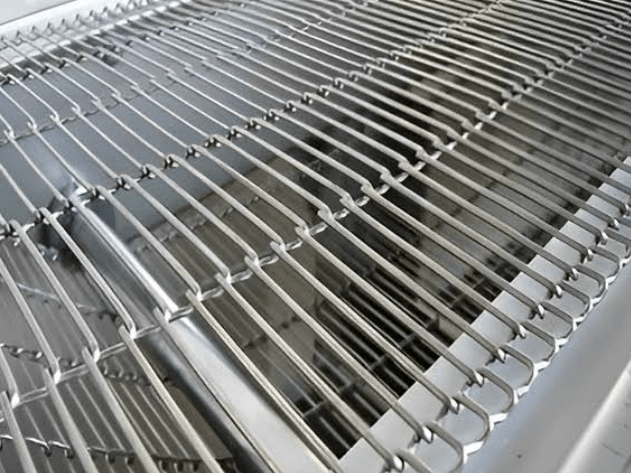
Known for its lightweight, open-mesh design and efficient product handling, a Flat-Flex Conveyor Belt offers several operational advantages that support modern manufacturing environments. Its versatility makes it suitable for a wide range of applications where consistent product flow and minimal maintenance are essential.
Faster and More Consistent Product Movement
Efficient production depends on maintaining a steady flow of materials between different processing stages. Delays, bottlenecks, or inconsistent product movement can reduce overall productivity and increase operational costs.
A Flat-Flex Conveyor Belt is designed to provide smooth, reliable transportation across production lines. Its balanced construction helps products move consistently while minimising interruptions that could affect downstream processes. This dependable movement supports higher production efficiency and contributes to more predictable manufacturing operations.
Improved Airflow for Processing Applications
Many production processes involve heating, cooling, drying, or freezing products as they move along the conveyor system. In these situations, airflow is a critical factor in achieving consistent processing results.
The open-mesh structure of a Flat-Flex Conveyor Belt allows air to circulate freely around products, promoting more uniform exposure during temperature-controlled operations. Better airflow can improve process consistency while helping production systems operate more efficiently.
Reduced Downtime Through Simplified Maintenance
Unexpected equipment downtime can significantly impact production schedules and operating costs. Selecting conveyor systems that are easy to inspect and maintain helps minimise these disruptions.
A Flat-Flex Conveyor Belt features a simple wire construction that allows operators to perform routine cleaning and visual inspections more efficiently. Its durable design also withstands continuous operation, helping reduce maintenance frequency and supporting higher equipment availability.
Supporting High-Speed Production
Many manufacturing facilities operate high-speed production lines where conveyor performance directly affects throughput. Conveyor systems must be capable of maintaining stable operation without compromising product handling.
The lightweight construction of a Flat-Flex Conveyor Belt enables efficient movement while reducing unnecessary mechanical resistance. This design supports reliable operation in fast-paced production environments, making it well suited for facilities focused on maximising output.
Versatility Across Different Production Environments
Operational efficiency often depends on using equipment that can adapt to changing production requirements. Conveyor systems that accommodate different product types and processing conditions provide greater flexibility over time.
A Flat-Flex Conveyor Belt is suitable for transporting a wide variety of products across applications involving washing, cooling, baking, freezing, packaging, and general material handling. Its adaptable design allows manufacturers to integrate the belt into both new installations and existing production lines with minimal disruption.
Better Product Handling
Protecting product quality is just as important as increasing production speed. Conveyor systems that provide stable product support help reduce unnecessary movement that may result in damage or inconsistent positioning.
The flexible wire pattern of a Flat-Flex Conveyor Belt creates a stable conveying surface while allowing products to travel smoothly through production. Consistent product handling helps improve process reliability and supports higher quality standards throughout manufacturing.
Supporting Sustainable Operations
Sustainability has become an important consideration for manufacturers seeking to reduce resource consumption and improve long-term operational performance.
The open construction of a Flat-Flex Conveyor Belt can contribute to efficient heating and cooling processes by allowing better airflow around products where required. Its durable materials also provide a long service life, reducing replacement frequency and minimising material waste over time. These characteristics support manufacturers pursuing more sustainable and cost-effective production practises.
A Smart Investment for Long-Term Efficiency
While the initial cost of equipment is an important consideration, businesses increasingly evaluate conveyor systems based on their overall lifecycle value.
A well-designed Flat-Flex Conveyor Belt combines durability, operational reliability, and low maintenance requirements to support efficient production over many years. Reduced downtime, consistent performance, and extended service life can contribute to lower operating costs and improved return on investment.
See also: How to Start a Business with Limited Capital
Conclusion
Improving operational efficiency requires more than upgrading machinery—it also depends on selecting conveyor systems that support reliable product movement, efficient processing, and long-term durability. A Flat-Flex Conveyor Belt offers practical advantages through improved airflow, simplified maintenance, consistent product handling, and adaptability across a wide range of production environments.
As manufacturing continues to evolve, investing in high-quality conveyor solutions remains an important part of building efficient and resilient production lines. Companies such as the Wire Belt Company continue to develop engineered conveyor systems that help manufacturers meet changing operational demands while maintaining productivity and reliability.