
Construction and geotechnical engineering projects depend on components that can provide dependable structural support under demanding conditions. Among these components, anchor systems play an important role in stabilizing foundations, retaining structures, slopes, tunnels, and other infrastructure. Selecting the right anchor bolt manufacturer is therefore not simply a purchasing decision. It can directly influence installation efficiency, structural performance, durability, and long-term project reliability.
Modern construction projects increasingly require anchoring systems that can perform in difficult geological conditions. Loose soil, fractured rock, unstable formations, groundwater, and restricted working spaces can all make conventional anchoring methods more complicated. Self-drilling hollow anchor systems have become an effective option for many of these applications because drilling and grouting can be integrated into the installation process.
Understanding the Role of Anchor Bolts
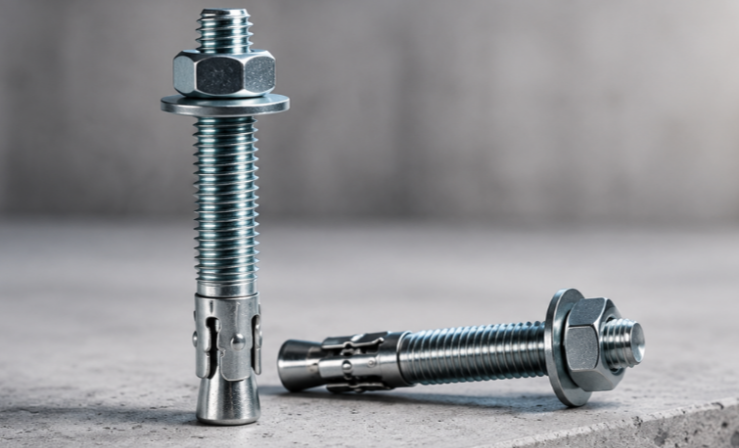
Anchor bolts and related anchoring systems are designed to transfer loads between structural elements and the surrounding ground or foundation material. Depending on the project, they can be used for slope stabilization, foundation reinforcement, tunnel support, retaining walls, micropiles, and soil-nailing applications.
The performance of an anchoring system depends on several factors, including steel quality, thread design, manufacturing accuracy, corrosion protection, installation method, and compatibility with other components. A manufacturer that understands these factors can provide more than a standard product; it can help engineers select an anchoring solution appropriate for the project’s requirements.
For this reason, contractors and engineering companies should evaluate manufacturers carefully before placing an order.
Manufacturing Experience Matters
Experience is one of the first factors worth considering when comparing manufacturers. A company that has spent many years developing anchor systems is more likely to understand the practical challenges encountered during drilling and installation.
ONTON, for example, has focused on self-drilling anchor bar manufacturing since 1991 and has developed a range of hollow bar products for different construction applications. Its product range includes rope-thread and T-thread self-drilling hollow bars as well as galvanized and stainless-steel options.
Long-term manufacturing experience can also contribute to better process control. Producing threaded hollow bars requires attention to material selection, rolling, forging, heat treatment, dimensional accuracy, and surface treatment. These factors can influence the final performance of the anchoring system.
Material Selection and Strength
The steel grade used in an anchor bar should be selected according to the project conditions rather than simply choosing the strongest material available. Different applications can require different combinations of tensile strength, yield strength, ductility, corrosion resistance, and weldability.
Self-drilling anchor bars may be produced from different steel grades, including 28Mn6, 41Cr4, J55, N80, S45E, S355N, and S460N. The appropriate material depends on the intended application and manufacturing process.
This is why technical consultation with a manufacturer can be valuable. Engineers should consider the geological conditions, required load capacity, installation method, expected service life, and applicable project standards before selecting an anchor bar.
Thread Design and Installation Efficiency
Thread design is another important consideration. Self-drilling hollow bars are available with different thread systems, including R-thread and T-thread configurations.
R-thread systems are commonly associated with rapid installation in loose or collapsing ground because drilling and grouting can be carried out in a combined process. T-thread systems are also widely used for applications such as deep foundations, slope stabilization, tunneling, and mining.
The correct thread configuration should match the drilling equipment, accessories, project specifications, and required installation procedure. Choosing a manufacturer with several available configurations gives contractors greater flexibility when working on different projects.
Corrosion Protection for Long-Term Performance
Environmental exposure can significantly affect the service life of steel anchoring components. Projects located in wet, coastal, underground, or chemically aggressive environments may require additional corrosion protection.
Hot-dip galvanizing is one method used to protect self-drilling hollow bars from corrosion. ONTON states that its galvanized hollow bars can be produced according to recognized galvanizing standards, with zinc coating used to provide additional protection to the steel.
For particularly demanding environments, stainless-steel anchor bars may also be considered. The selection should depend on the project’s expected service conditions and engineering requirements.
Quality Control Should Be a Priority
A professional manufacturer should have clear quality-control procedures covering raw materials, production, dimensions, mechanical properties, and finished products.
Certifications can provide useful evidence of a manufacturer’s quality-management approach, but buyers should also look at the manufacturer’s testing capabilities and technical documentation. ONTON reports ISO 9001:2015 certification and references standards including EN 14490, EN 14199, and ASTM F432 for relevant applications.
These details can help contractors make a more informed purchasing decision instead of relying only on price.
Customization and Technical Support
Not every construction project has identical requirements. Anchor length, thread type, diameter, steel grade, surface treatment, accessories, and packaging may need to be adapted to project specifications.
A capable manufacturer should therefore be able to discuss customized requirements and provide technical assistance when necessary. This can be particularly useful for large infrastructure projects where standard products may not completely match the project design.
Technical support can also help reduce installation problems. Correct selection of drill bits, couplers, nuts, plates, grout systems, and other accessories can make the overall anchoring system more efficient.
Packaging and Delivery Also Matter
Even a technically excellent product can create problems if it is poorly packaged or delivered late. Construction projects often operate according to strict schedules, so reliable logistics are an important part of supplier selection.
Proper packaging can protect threaded bars and accessories from moisture, corrosion, impact, and handling damage during transportation. ONTON describes protective packaging methods for its hollow bars and accessories, including waterproof outer layers and protected accessory packaging.
Before ordering, contractors should confirm production lead times, packaging arrangements, shipping options, and documentation requirements.
Choosing a Manufacturer for the Entire Project
The best anchor bolt manufacturer is not necessarily the company offering the lowest initial price. A more useful comparison considers product quality, manufacturing experience, technical support, customization capabilities, standards, corrosion protection, delivery reliability, and after-sales assistance.
A supplier that understands the complete anchoring process can become a valuable technical partner rather than simply a product vendor. This is especially important for projects involving tunnels, unstable slopes, deep foundations, soil nails, or other applications where ground conditions can vary considerably.
Final Considerations
Choosing an anchoring system should begin with the project’s engineering requirements. Once the required load capacity, ground conditions, service life, installation method, and environmental exposure are understood, contractors can compare manufacturers more effectively.
A reliable manufacturer should provide consistent products, appropriate material options, suitable thread systems, quality control, technical documentation, and dependable delivery. By evaluating these factors before purchasing, construction companies can reduce installation risks and select an anchoring solution designed for long-term performance.
For demanding geotechnical and construction applications, working with an experienced manufacturer can make the difference between simply purchasing anchor components and developing a complete, dependable ground-support solution.